Standards and audits
A library of written standards for the brand, the hotel, a department, a room type or a procedure. Run and schedule audits, track corrective plans, see what keeps failing, and set when rooms must be inspected.
Technology Management
Keep recovery procedures, continuity plans, owners and review records together. Help the right teams find the approved next step during a disruption.
The problem
The property management system stops at check-in on a Friday afternoon. The recovery plan is a draft nobody approved, front desk staff do not know the manual process, and no one knows who tells the other departments.
The recovery plan is a draft nobody approved.
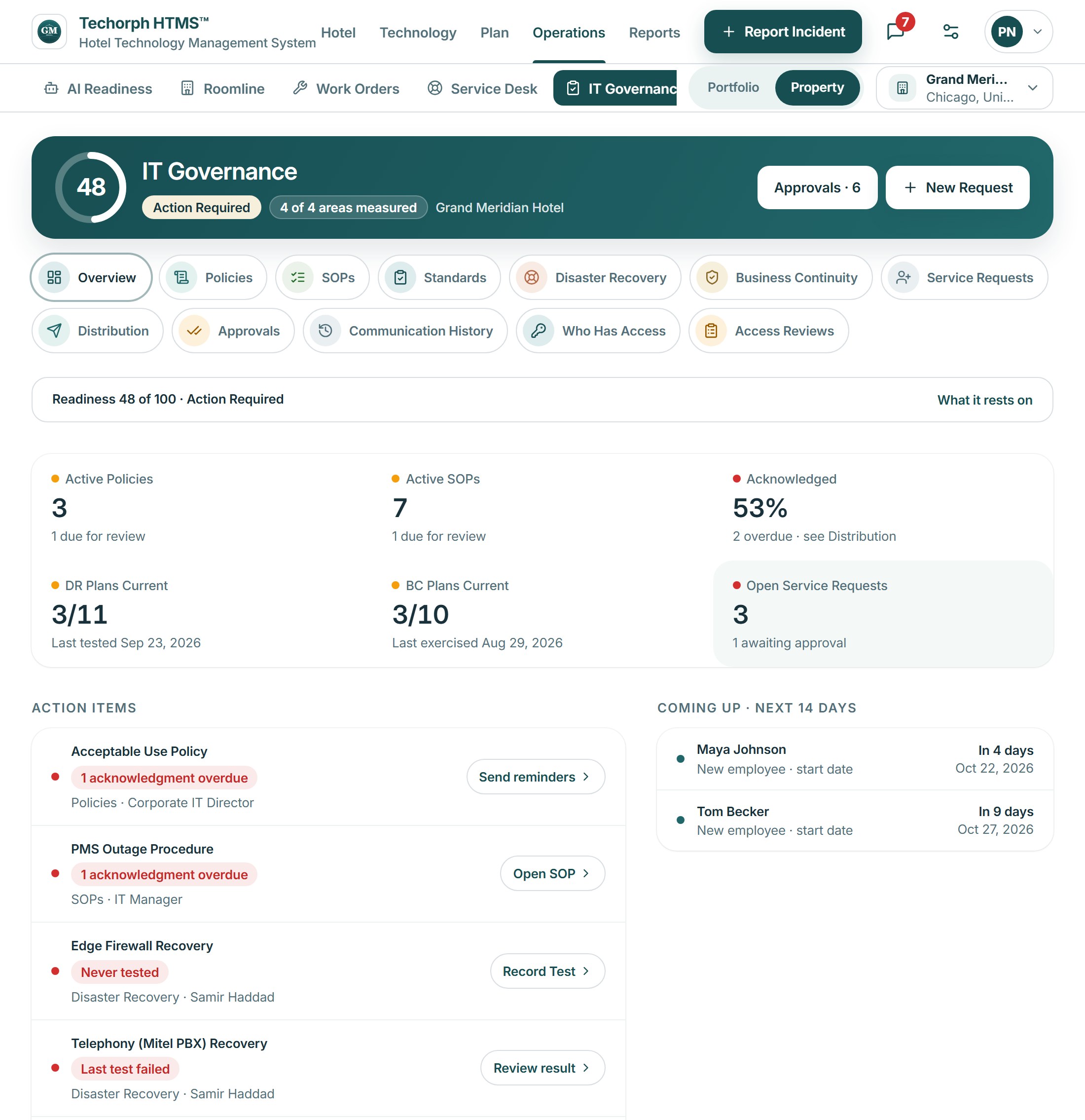
In HTMS™ A recovery plan for each critical system records its owner, recovery time and data-loss objectives and test results, and goes for approval.
Front desk staff do not know the manual process.
In HTMS™ Continuity plans hold the manual workarounds and the order systems come back, and exercises show whether staff can follow them.
Nobody knows who tells the other departments.
In HTMS™ Downtime is tracked step by step, and hotel communications are drafted for a person to send.
Policies are written, but nobody can show they were read.
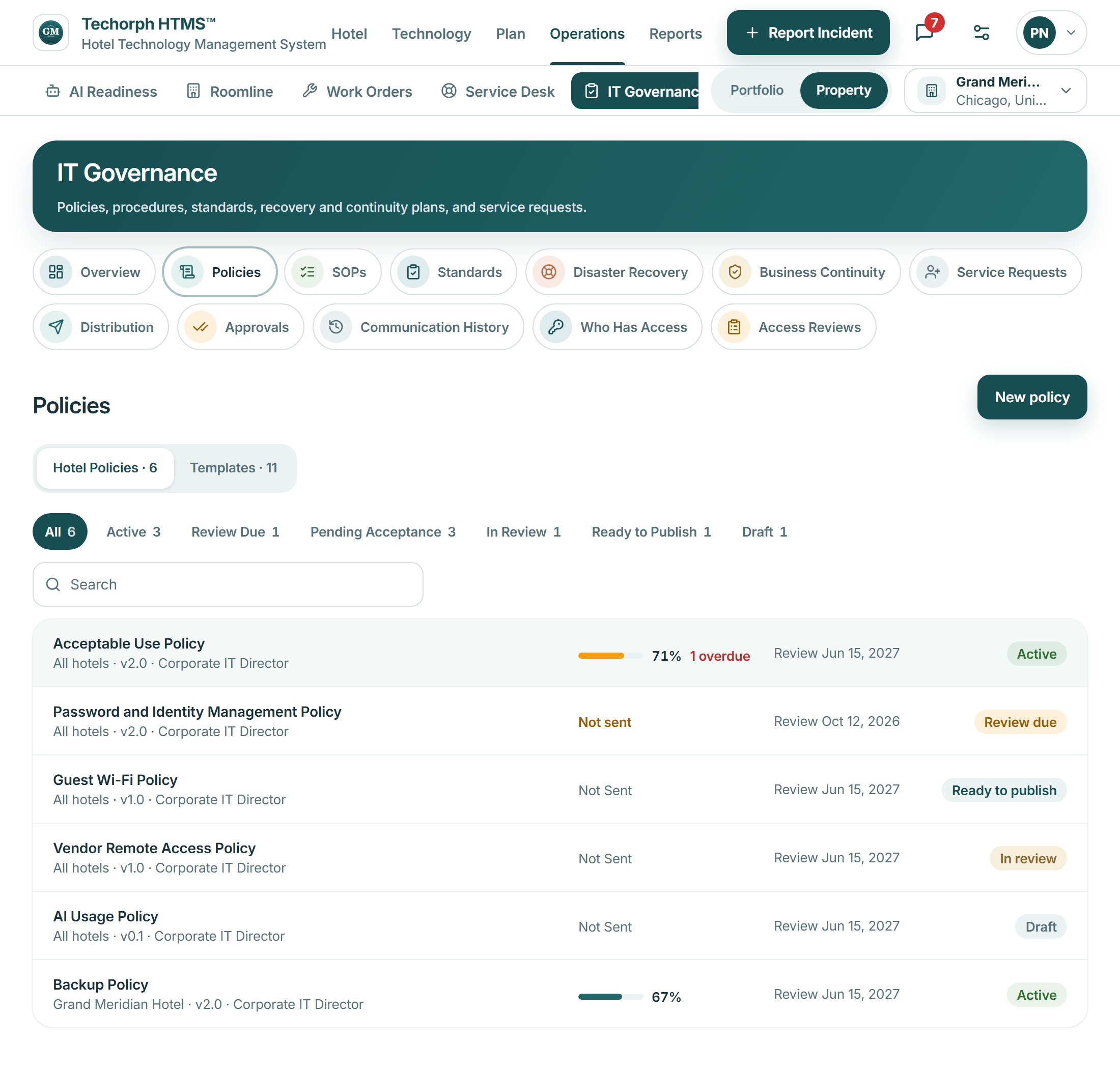
In HTMS™ Policies and SOPs keep templates and versions, go out for acknowledgement and approval, and the record shows who read what, and when.
Record a disaster recovery plan for each critical system with an owner, recovery time and data-loss objectives, and test results.
Record continuity plans with service criticality, manual workarounds, dependency sequence and exercises.
Keep IT policies and SOPs with templates and versions, and send them for acknowledgement and approval.
Track recovery, draft hotel communications for a person to send, and record a post-incident review.
Also in governance
The written standards a hotel inspects against live here too, beside its policies and SOPs.
The room inspection checklist itself stays with room inspections in Operations.
Business continuity shows how many plans are current, which critical services are covered and what needs action, such as a critical service with no approved plan or recovery time, with each plan’s last exercise and review date.
HTMS™ product screen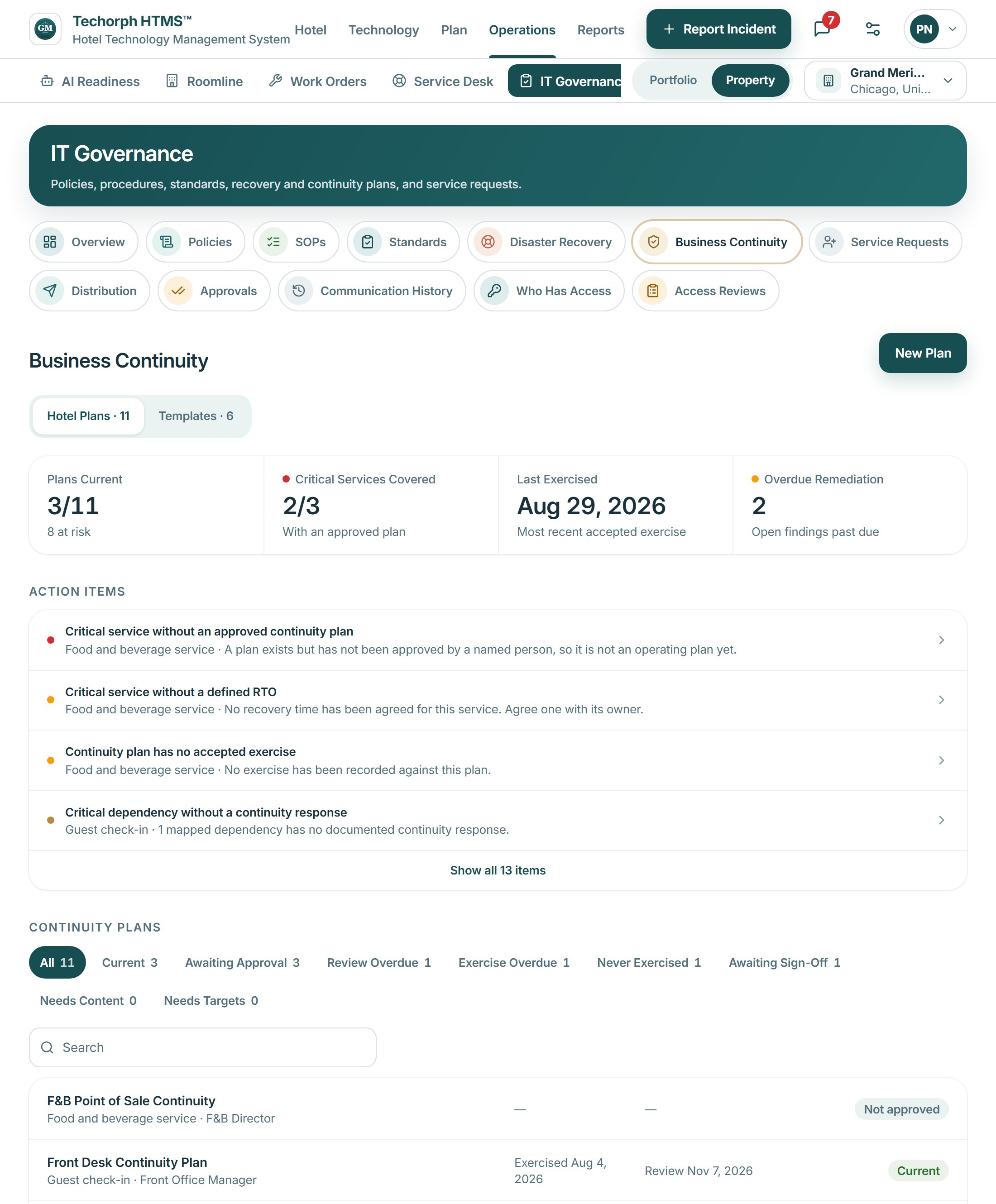
Keyline flags a critical system with no approved recovery plan or downtime procedure, and recovery plans never proven by a test, naming the records it read. It says what is missing; a person approves the plan and decides what happens next.
A realistic scenario
At a 200-room hotel the night auditor cannot reach the property management system. The IT manager follows the recovery steps in the plan, drafts a notice to departments for the duty manager to send, and records a post-incident review the next day.